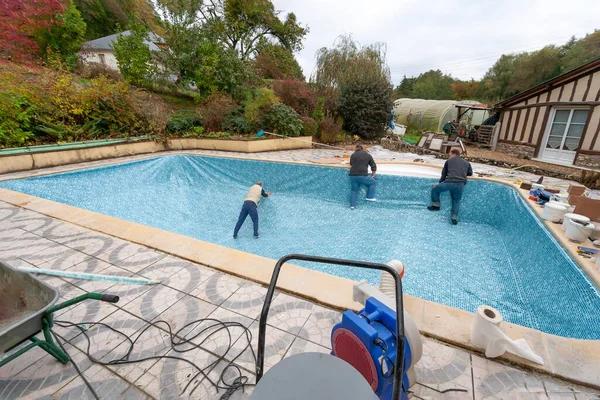
When considering the longevity and durability of a swimming pool, many factors come into play, from materials used in construction to maintenance practices. However, one crucial aspect that often goes unnoticed is the stability of the soil upon which the pool is built. Soil stability plays a pivotal role in determining how well a pool will withstand the test of time.
The foundation of any structure is critical, and for pools, this foundation begins with the ground beneath them. The type and condition of soil can significantly influence both initial construction quality and long-term structural integrity. Different soils have varying load-bearing capacities; some are access this resource for more info prone to shifting or settling over time, directly impacting a pool’s durability.
For instance, clay soils tend to expand when wet and contract when dry, leading to movement that can cause cracks or shifts in a pool’s structure. Sandy soils may not provide sufficient support due to their loose nature unless properly compacted during construction. Conversely, rocky or gravelly soils typically offer excellent drainage but might require substantial excavation work to ensure an even surface for building.
Before constructing a pool, conducting thorough soil testing is essential. Geotechnical engineers assess various properties such as composition, moisture content, density, and compaction levels to determine suitability for supporting structures like pools. This assessment helps identify potential issues early on so they can be mitigated through design adjustments or additional engineering solutions such as reinforced foundations or specialized drainage systems.
Proper site preparation based on these assessments ensures that soil instability does not compromise long-term durability. Techniques like grading help create level surfaces while ensuring proper water runoff away from the pool area—a crucial factor since standing water exacerbates soil erosion around structures over time.