Tag: Health

  • How to Use Shata Dhauta Ghrita Face Cream in Your Daily Routine

    How to Use Shata Dhauta Ghrita Face Cream in Your Daily Routine

    Ayurveda has long relied on natural ingredients to promote healthy, balanced skin, and one of its most treasured preparations is Shata Dhauta Ghrita. Created through a traditional process of repeatedly washing pure ghee, this unique formulation transforms into a soft, cooling cream that is widely used in Ayurvedic skincare practices.

    Today, Shata Dhauta Ghrita cream is gaining popularity among people looking for natural skincare solutions that support hydration and skin comfort without relying on complex formulations. Its lightweight texture and nourishing properties make it a versatile addition to daily skincare routines.

    Many skincare enthusiasts appreciate it as a natural ghee moisturizer for face because it helps provide moisture while supporting the skin’s natural barrier. Whether you have dry, normal, combination, or sensitive skin, incorporating this Ayurvedic preparation into your routine can help maintain a healthy-looking complexion.

    What Makes Shata Dhauta Ghrita Unique?

    Unlike ordinary ghee, Shata Dhauta Ghrita undergoes a traditional preparation process in which pure ghee is washed repeatedly, often one hundred times. This process changes its consistency from a dense fat into a smooth, creamy emulsion.

    As a result, the final product offers:

    • A lightweight texture
    • Enhanced spreadability
    • A cooling sensation
    • Improved skin comfort
    • Easier absorption

    These characteristics make it more suitable for topical skincare use than regular ghee. Its gentle nature has contributed to its long-standing use in Ayurvedic beauty and wellness traditions.

    Start with a Clean Face

    For any skincare product to work effectively, it should be applied to clean skin.

    Before using Shata Dhauta Ghrita, wash your face with a gentle cleanser suitable for your skin type. Cleansing removes dirt, excess oil, makeup residue, and environmental pollutants that can interfere with product absorption.

    After cleansing:

    • Pat the skin dry with a soft towel.
    • Avoid rubbing the skin aggressively.
    • Leave the skin slightly damp if desired.

    Applying moisturizer to freshly cleansed skin helps lock in hydration and supports a smoother application. A clean base allows the nourishing properties of the cream to interact more effectively with the skin.

    Incorporating It into Your Morning Routine

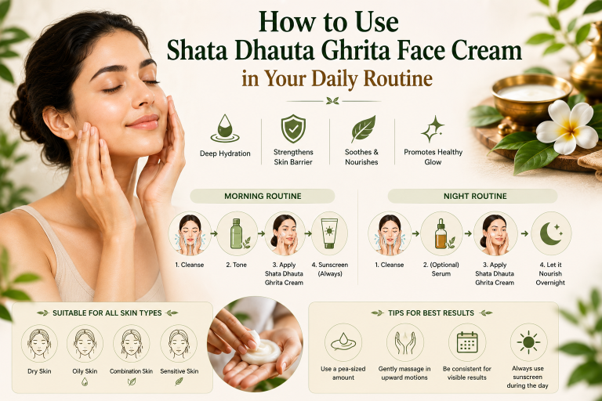
    Many people successfully use Shata Dhauta Ghrita as part of their morning skincare regimen. After cleansing, apply a small amount to the face and neck using gentle upward motions. Because the preparation is rich yet smooth, only a small quantity is typically needed.

    Morning application may help:

    • Maintain skin hydration throughout the day
    • Support skin comfort
    • Create a soft, smooth feel
    • Improve the appearance of dryness

    Allow the cream to absorb fully before applying sunscreen. Since daily sun protection is essential, sunscreen should remain the final step in a daytime skincare routine.

    Using It as a Nighttime Moisturizer

    Nighttime is often considered one of the best times to use deeply nourishing skincare products.

    During sleep, the skin naturally undergoes repair and renewal processes. Applying Shata Dhauta Ghrita before bed can help provide ongoing moisture while supporting skin comfort overnight.

    A simple evening routine may include:

    • Cleansing the face
    • Applying any targeted treatments
    • Gently massaging the cream into the skin

    Many individuals find that their skin feels softer and more refreshed upon waking after consistent nighttime use.

    The overnight application also allows the product to remain on the skin for an extended period without exposure to environmental stressors.

    Adjusting Use for Different Skin Types

    One of the advantages of Shata Dhauta Ghrita is its versatility.

    Different skin types may benefit from slightly different application approaches.

    Dry Skin

    Individuals with dry skin may benefit from daily use, both morning and evening. The nourishing properties help support hydration and reduce feelings of tightness.

    Combination Skin

    Those with combination skin can apply the cream evenly or focus more heavily on areas prone to dryness.

    Sensitive Skin

    Sensitive skin often responds well to gentle moisturizers. Applying a small amount initially and monitoring the skin’s response can help determine the ideal frequency.

    Oily Skin

    People with oily skin may prefer using smaller amounts or reserving application for nighttime use.

    Finding the right balance helps ensure optimal comfort and results.

    Targeting Dry or Rough Areas

    Beyond facial use, Shata Dhauta Ghrita can also be applied to localized dry areas.

    Common areas that may benefit include:

    • Around the nose
    • Dry patches on the cheeks
    • The forehead
    • Areas exposed to environmental stress

    Applying a small amount directly to these spots can help improve skin softness and comfort. Seasonal weather changes, air conditioning, and environmental conditions can sometimes cause localized dryness even in individuals with otherwise balanced skin.

    Pairing It with Other Skincare Products

    Shata Dhauta Ghrita generally fits well within a broader skincare routine.

    It can be paired with products such as:

    • Gentle cleansers
    • Hydrating toners
    • Serums
    • Sunscreens

    When layering skincare products, lighter formulations are typically applied before heavier creams.

    A common sequence may be:

    1. Cleanser
    2. Toner
    3. Serum
    4. Moisturizer
    5. Sunscreen (daytime)

    Allowing each product to absorb before applying the next helps maximize effectiveness and comfort. Keeping routines simple often supports better consistency and long-term results.

    Common Mistakes to Avoid

    While Shata Dhauta Ghrita is relatively easy to use, a few simple practices can help optimize results.

    Avoid:

    • Applying excessive amounts
    • Skipping cleansing before application
    • Expecting immediate results
    • Ignoring patch testing for sensitive skin
    • Neglecting sunscreen during the day

    Consistency is generally more important than quantity. A small amount used regularly often provides better results than occasional heavy application.

    Skincare improvements typically develop gradually as hydration and barrier support accumulate over time.

    Building a Consistent Routine

    The effectiveness of any skincare product depends largely on regular use.

    To build consistency:

    • Apply at the same times each day.
    • Store the product in a clean, cool location.
    • Use gentle application techniques.
    • Monitor how your skin responds.

    Many people notice that their skin becomes more comfortable and balanced when moisturizing becomes a consistent daily habit. A well-maintained routine does not need to be complicated. Often, simple and reliable practices produce the most sustainable results.

    Why Ayurvedic Skincare Continues to Grow in Popularity

    Consumers today are increasingly interested in skincare solutions that combine tradition with simplicity.

    Ayurvedic preparations like Shata Dhauta Ghrita appeal to individuals seeking:

    • Natural ingredients
    • Time-tested formulations
    • Gentle skincare support
    • Holistic wellness practices

    This growing interest reflects a broader shift toward mindful self-care and long-term skin health. Ancient formulations continue to resonate because they focus on supporting the skin’s natural balance rather than relying solely on intensive treatments.

    Conclusion

    Shata Dhauta Ghrita can be a valuable addition to a daily skincare routine when used consistently and appropriately. Its unique preparation process creates a smooth, cooling cream that helps support hydration, skin comfort, and overall skin health.

    Whether incorporated into a morning routine, used as an overnight moisturizer, or applied to specific dry areas, this Ayurvedic preparation offers a simple and versatile approach to skincare. Its compatibility with various skin types further contributes to its appeal.

    By cleansing properly, applying the right amount, maintaining consistency, and pairing it with other essential skincare practices such as sun protection, individuals can make the most of its nourishing qualities. As interest in traditional wellness continues to grow, Shata Dhauta Ghrita remains a timeless example of how Ayurvedic skincare can fit seamlessly into modern daily routines.


  • Signs You May Need Professional Hearing Solutions

    Signs You May Need Professional Hearing Solutions

    Hearing is a vital component of communication, connection, and daily life. When hearing begins to decline, it often happens gradually, making the early warning signs difficult to notice. Many individuals delay seeking help because they believe their symptoms are temporary, age-related, or not serious enough. However, timely assessment and treatment can protect your long-term hearing health.

    Suppose you frequently struggle to understand conversations, especially in crowded or noisy environments. In that case, it may be time to consider professional hearing solutions, which are designed to diagnose the root cause and restore clarity in everyday communication.

    People often choose to consult specialists at the best ENT hospital in Vadodara when they begin noticing persistent symptoms, as early consultation helps prevent further hearing deterioration and offers timely, expert-guided care.

    Difficulty Hearing Conversations Clearly

    One of the most common signs of hearing decline is difficulty following conversations. You may notice that speech sounds unclear, muffled, or softer than before. This problem becomes more noticeable in group discussions or when multiple people are speaking.

    Some people find that they can hear others talking but cannot distinguish the words, which leads to frequent misunderstandings. This is an early indicator that professional evaluation is necessary. A hearing specialist can determine whether the hearing loss is due to age, noise exposure, infection, or another underlying condition.

    Frequently Increasing the Volume of Devices

    If you often find yourself turning the volume higher on your television, phone, or speakers, your hearing may be gradually declining. Family members may comment that the volume is too loud, or you may find normal sound levels insufficient for comfort.

    Repeating the volume increase is a compensatory behaviour for reduced hearing ability. Over time, excessively loud sounds may further damage your ears. Seeking a hearing assessment prevents additional strain and allows for early intervention.

    Ringing, Buzzing, or Humming in the Ears

    Tinnitus, commonly described as ringing, buzzing, clicking, or humming in the ears, is a frequent symptom associated with hearing issues. While tinnitus itself is not a disease, it often signals an underlying problem, such as age-related hearing loss, noise-induced damage, or inner-ear disorders.

    Persistent tinnitus can interfere with concentration, sleep, and emotional well-being. A professional evaluation helps determine the cause and identify effective treatment approaches to manage or reduce symptoms.

    Feeling Fatigued After Listening or Socializing

    Listening fatigue is a lesser-known but significant sign of hearing problems. When your ears struggle to process sounds, your brain works harder to fill in the gaps, making social interactions mentally tiring.

    Symptoms of listening fatigue include:

    • Feeling drained after conversations
    • Avoiding social gatherings
    • Difficulty multitasking while listening
    • Increased stress or irritability during communication

    Professional evaluation can help identify early hearing loss and provide support options to reduce strain and improve communication ease.

    Asking People to Repeat Themselves Frequently

    If you often find yourself saying “What?” or “Can you repeat that?” it may be an early sign that your hearing clarity is compromised. This is especially common when listening to soft speakers, children, or individuals with higher-pitched voices.

    When repetition becomes a frequent necessity, it indicates that your ears are not receiving or processing sounds efficiently. Comprehensive hearing tests can determine the severity of the issue and recommend corrective options.

    Difficulty Hearing High-Frequency Sounds

    High-frequency hearing loss is one of the earliest forms of hearing decline. You may experience difficulty hearing:

    • Birdsong
    • Doorbells
    • Phone beeps
    • Timers or alarms
    • Voices of women and children

    These higher-pitched sounds often fade before lower frequencies, making the change subtle. Early detection helps slow progression and improve communication.

    Avoiding Social Situations

    People with hearing difficulties may gradually start avoiding social interactions because conversations feel exhausting or embarrassing. Struggling to keep up with discussions can lower confidence and affect emotional well-being.

    Isolation is one of the most damaging consequences of untreated hearing loss. Seeking professional guidance early helps restore confidence and enables individuals to re-engage with family, friends, and community activities.

    Trouble Hearing Over the Phone

    Phones cannot visually supplement sound, unlike face-to-face conversations, so hearing loss becomes more noticeable during calls. You may feel that voices are unclear, muffled, or distant.

    If you constantly switch ears while talking, adjust volume repeatedly, or avoid calls altogether, this may be a sign that your hearing needs attention. Specialist evaluation can determine whether the issue is temporary or a sign of long-term hearing decline.

    Sensitivity to Loud Sounds

    Some individuals experience increased sensitivity to loud environments, such as traffic, concerts, or crowded places. This condition can be associated with hearing issues or damage to the inner ear.

    Sound sensitivity may also accompany tinnitus or sudden changes in hearing. A professional assessment is essential for determining whether the condition is caused by nerve damage, infections, or prolonged exposure to sound.

    Ear Pain, Pressure, or Fullness

    Although hearing loss is usually painless, ear discomfort may accompany conditions like infections, earwax buildup, allergies, or fluid accumulation. Persistent pressure or fullness in the ears can muffle sound and impact hearing clarity.

    Ignoring these sensations may lead to complications or worsening hearing. ENT specialists can identify the cause and offer appropriate treatment, whether medical or surgical.

    Family History of Hearing Loss

    Hearing disorders often run in families. If parents or grandparents experienced early or progressive hearing loss, you may be genetically predisposed. Even if your symptoms seem mild, genetic factors can accelerate hearing decline, making early preventive care essential.

    Audiological assessments help establish a baseline, track changes over time, and provide early interventions that protect long-term hearing health.

    Work or Lifestyle Includes Loud Noise Exposure

    Prolonged exposure to loud sounds, whether at work or during recreational activities, can cause significant hearing damage. Professions such as construction, aviation, factory work, or music production are associated with an increased risk of noise-induced hearing loss.

    Warning signs include:

    • Temporary muffled hearing after loud exposure
    • Ringing in the ears
    • Difficulty understanding speech after long workdays

    Protective measures and regular checkups are recommended for anyone exposed to loud environments.

    When to Seek a Professional Hearing Assessment

    If you experience one or more of the signs mentioned above, scheduling a hearing evaluation is essential. Hearing tests are painless, quick, and highly accurate. They help identify the type, cause, and severity of hearing issues and guide your treatment plan.

    Early intervention provides several benefits:

    • Better hearing health
    • Reduced communication difficulties
    • Lower risk of cognitive decline
    • Improved social confidence
    • Enhanced overall quality of life

    Hearing specialists can recommend appropriate care, such as medical treatment, sound therapy, or advanced device-based support.

    Conclusion

    Hearing loss is often subtle, gradual, and easily overlooked. However, recognizing the early signs and seeking timely help can prevent further deterioration and significantly improve daily communication, comfort, and confidence. Whether you struggle to hear conversations, experience ringing in your ears, feel fatigued after social interactions, or notice a decline in sound clarity, professional assessment is essential.

    By addressing the problem early, you protect your hearing health and maintain a strong connection with the world around you. If you’re experiencing any of these warning signs, take the first step toward better auditory wellness by consulting a qualified hearing professional today.

  • The Silent Power of Sleep Why Rest Is Your Real Superfood

    The Silent Power of Sleep Why Rest Is Your Real Superfood

    In the hustle and bustle of modern life, sleep often takes a backseat to the myriad demands we face daily. Yet, unbeknownst to many, sleep holds a silent power that is as crucial to our well-being as any superfood. While kale smoothies and chia seed puddings have their place in promoting health, it is during those quiet hours of rest that our bodies undergo profound rejuvenation.

    Sleep serves as the body’s natural reset button. During this time, critical processes take place that are essential for maintaining physical health and cognitive function. The body repairs cells, tissues, and muscles while also consolidating memories and processing information gathered throughout the day. This intricate balance between restoration and cognitive enhancement underlines why adequate sleep is indispensable.

    One of the most compelling benefits of proper rest is its impact on mental health. Chronic sleep deprivation has been linked to anxiety disorders, depression, and other mood disturbances. When we consistently achieve restful slumber, our brains are better equipped to regulate emotions and cope with stressors effectively. Thus, prioritizing sleep can be viewed as an investment in emotional resilience.

    Moreover, quality sleep plays a pivotal role in bolstering immunity. During deep stages of rest known as slow-wave or non-REM (Rapid Eye Movement) sleep cycles—our immune system releases proteins called cytokines which aid in combating infections and inflammation within the body; insufficient amounts may compromise these protective mechanisms over time leading towards increased susceptibility towards illnesses such colds flu viruses among others thereby emphasizing importance prioritizing nightly shut-eye routine order maintain optimal defense against pathogens lurking around us every day!

    Additionally noteworthy aspect concerns metabolism regulation: individuals who regularly shortchange themselves on needed zzz’s run higher risk developing conditions like obesity diabetes due hormonal imbalances triggered lack sufficient downtime recharge properly affecting appetite control insulin sensitivity ultimately impacting overall metabolic efficiency negatively if left unchecked long term basis potentially resulting serious consequences down road should neglect continue unabated without intervention corrective measures taken promptly address issue head-on before spiraling out hand irreversibly damaging ways preventable through conscious effort ensure ample opportunity recuperate each night uninterrupted manner possible given circumstances surrounding lifestyle choices commitments involved therein balancing act required navigate successfully achieving desired outcome sustained longevity vitality sought after goal attainable only via commitment embracing transformative potential offered via consistent adherence healthy habits conducive promoting restorative peaceful nights ahead!

    In conclusion recognizing acknowledging immense value derived from cultivating good sleeping practices cannot overstated enough especially considering far-reaching implications associated thereof not merely limited singular aspect but rather encompassing multitude interconnected facets comprising holistic picture encompassing entirety human experience fundamentally intertwined interwoven fabric existence itself therefore urging everyone reevaluate current stance regarding bedtime routines seek improve wherever feasible reap rewards newfound energy clarity focus await discovery journey unfold naturally organically overtime!